
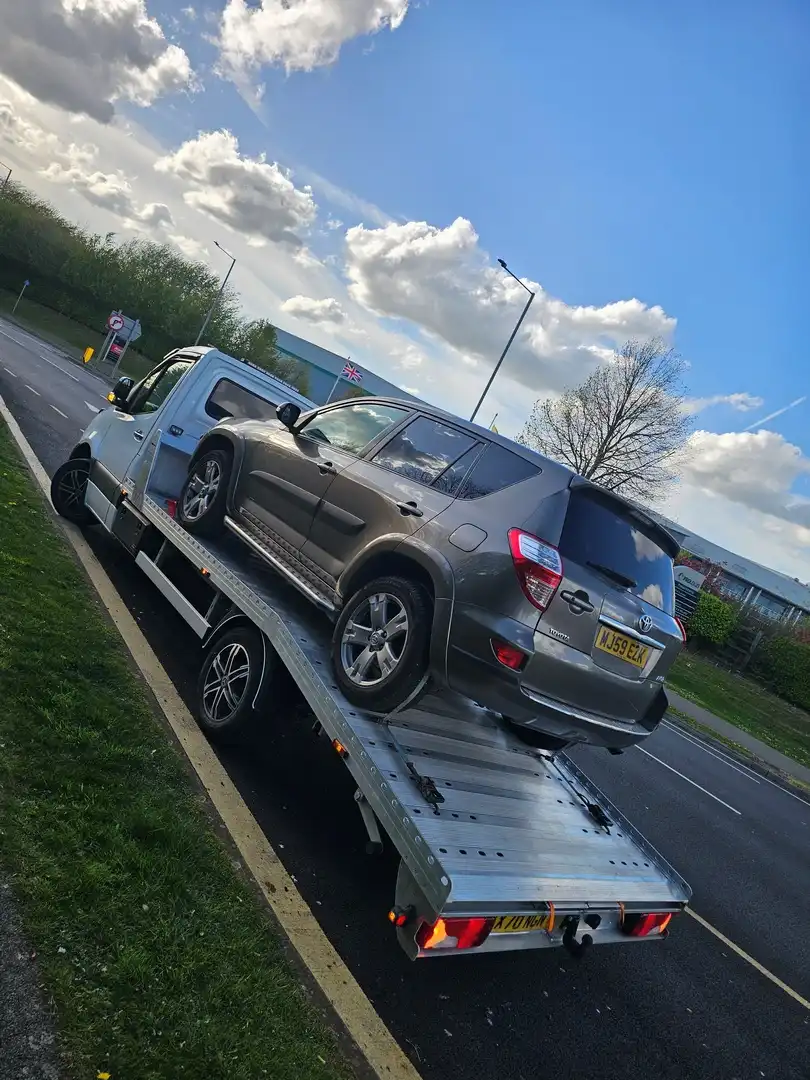
How Breakdown Recovery Works – Types of Trucks, Process & What to Expect
Breakdown recovery. Car recovery. Vehicle recovery. Different names for the same essential service – getting your broken-down vehicle from the roadside to a place of safety.
But what actually happens when you call? What types of recovery trucks are there? What are the most common breakdown causes? And when should you call instead of trying to fix it yourself? This guide explains everything you need to know about breakdown recovery services – no jargon, just the facts.
What Is Breakdown Recovery? (Simple Definition)
Breakdown recovery is the service of transporting a broken-down, non-running, or damaged vehicle from its current location to a place of safety – usually your home, a garage, or a secure depot.
When do you need breakdown recovery? Your car won't start (dead battery, starter motor failure, electrical fault), engine has failed (cambelt snapped, overheating, head gasket failure), flat tyre with no spare, ran out of fuel, wrong fuel (petrol in diesel or diesel in petrol), or an accident.
What breakdown recovery is NOT: NOT a mobile mechanic service (some providers may try minor fixes like jump starts or tyre inflations). NOT a legal or insurance advice service. NOT an emergency service (if you're in danger or blocking a motorway live lane, call 999 first).
The goal: Get you and your vehicle to safety as quickly and safely as possible.
Most Common Vehicle Breakdown Causes (UK Statistics)
According to UK breakdown data, here are the most common reasons vehicles break down:
- 1. Flat or faulty battery (most common by far) – Old batteries lose capacity. Cold weather kills weak batteries. Lights left on drains them. Jump start may work, but replacement may be needed.
- 2. Tyre issues (punctures, blowouts, slow punctures) – Nails, screws, or potholes cause punctures. Under-inflated tyres overheat and fail. Many cars no longer carry a spare wheel – just a repair kit.
- 3. Alternator failure – Alternator charges your battery while driving. When it fails, your battery drains. The car will eventually stop running – even if it started fine.
- 4. Starter motor failure – You turn the key. You hear a single click (or nothing). Lights work. Battery is fine. Starter motor has failed.
- 5. Engine overheating – Coolant leak, broken water pump, failed thermostat, or blown head gasket. If temperature gauge goes into the red, stop safely immediately.
- 6. Out of fuel – Fuel gauge is not always accurate. More common than you think. Diesel engines are very hard to restart after running dry.
- 7. Wrong fuel (misfuelling) – Petrol in a diesel engine (most common). Diesel in a petrol engine (less common but still happens). Do NOT start the engine if you realise before turning the key.
- 8. Cambelt/timing belt failure – Cam belts need replacement every 40,000-100,000 miles. If it snaps while driving, the engine is usually destroyed. Very expensive repair.
If you break down on a motorway: left indicators on → pull onto hard shoulder or emergency refuge area → get out on the passenger side → get behind the barrier → call for help. Do NOT attempt repairs. Do NOT stand near the traffic.
Types of Breakdown Recovery Trucks (Different Vehicles Need Different Trucks)
Not all recovery trucks are the same. Here are the main types you'll see on UK roads – and what each is best for.
1. Flatbed Recovery (Slide Bed) – Most Common, Safest
How it works: The bed tilts down to ground level. The vehicle is winched onto the bed. The bed raises back to horizontal. The vehicle is strapped down with multiple straps.
Best for: Most cars, SUVs, vans, motorcycles, classic cars, electric vehicles (EVs).
Advantages: Vehicle is completely off the ground. No wear on tyres. Safest method. No damage to transmission on automatic cars (wheels don't turn).
2. Wheel-Lift (Hook and Chain) – Rare, Insecure
How it works: A metal yoke lifts the front or rear wheels off the ground. The other wheels stay on the road.
Disadvantages: Professional recovery services do not use this method. Can damage the vehicle (bumper, suspension, transmission on automatic cars). Unsafe for long distances.
3. Low Loader – For Low Cars and Classics
Best for: Low sports cars (Porsche, Lotus), classic cars with fragile undertrays, very large SUVs with low clearance, lowered/modified cars.
Advantages: Won't scrape the front bumper, undertray, or splitter. Lower angle than standard flatbed.
4. Motorcycle Recovery – Specialist Straps and Chocks
How it works: Motorcycle is strapped upright into a front wheel chock on a flatbed or dedicated bike trailer. Prevents the bike from falling over during transport.
5. Heavy-Duty Recovery (For Reference Only)
Standard breakdown recovery vehicles have a weight limit of 3.5 tonnes (standard car, large SUV, van). For HGVs (lorries over 3.5 tonnes), buses, or agricultural vehicles, call a specialist heavy-duty recovery company.
What To Do When Your Vehicle Breaks Down – Step By Step
On a motorway (most dangerous)
- Move left – indicate left and move onto the hard shoulder (or nearest emergency refuge area)
- Turn on hazard lights – leave them on
- Get out on the passenger side – away from traffic
- Get behind the barrier – stand well back from the carriageway
- Call for breakdown recovery – use an emergency roadside telephone or your mobile. If you use a mobile, share your location using what3words
- Do NOT attempt repairs – you are not safe on the hard shoulder
- Do NOT stand between your vehicle and traffic
- Do NOT put a warning triangle on a motorway – it's dangerous to walk on the hard shoulder
On a normal A-road or B-road
- Pull over as far left as safely possible – off the carriageway if you can
- Turn on hazard lights – especially at night or in poor weather
- Place a warning triangle – at least 45 metres behind your vehicle (behind any bend or hill)
- Stand behind a barrier or away from traffic
- Call for breakdown recovery – share your location and vehicle details
In a car park, driveway, or residential street (safest location)
- No immediate danger – you have time to assess the problem
- Check basic fixes – dead battery (jump start), out of fuel (call someone to bring fuel), flat tyre (use spare if you have one)
- If you can't fix it yourself, call for breakdown recovery
What Happens When You Call Breakdown Recovery? (The Process)
| Step | What happens | Typical duration |
|---|---|---|
| 1. You call | You speak to a person. They ask: where are you? what happened (symptoms)? what make and model? where do you want the vehicle to go? | 2-3 minutes |
| 2. Assessment | They may ask for symptoms to decide if roadside assistance (try to fix) or recovery (take away) is needed. | 1-2 minutes |
| 3. Dispatch | A recovery truck is assigned. You receive a live tracking link. | 1-2 minutes |
| 4. Arrival | The recovery driver finds you (GPS, what3words, landmarks). They assess the situation and try a quick fix (jump start, tyre inflate) if safe and quick. | 20-60 minutes (depending on location) |
| 5. Decision | If the vehicle can be fixed on the spot (5-10 minutes), they will attempt it. If not, they will recover you. | 5-10 minutes |
| 6. Load your vehicle | Flatbed tilts. Winch attaches. Vehicle is pulled on. Straps secure it. | 5-15 minutes |
| 7. Transport | You ride in the recovery truck cab (safety regulations). Vehicle is on the back. | 15-90 minutes |
| 8. Delivery | Vehicle is unloaded at your chosen destination (home, garage, depot). You pay (if not covered by insurance). | 5-10 minutes |
Total time: Usually 30-90 minutes from call to delivery. Many providers send a live tracking link so you can see exactly where the recovery truck is.
Related guide: How vehicle recovery works – more detailed step-by-step.
Breakdown Recovery vs Roadside Assistance – What's The Difference?
| Feature | Roadside Assistance | Breakdown Recovery |
|---|---|---|
| What happens | A mechanic comes to you and tries to fix the problem on the spot. | Your vehicle is taken away on a flatbed truck. |
| When it's used | Minor problems: flat tyre, dead battery (jump start works), out of fuel, minor electrical fault, loose belt. | Major problems: cambelt snapped (engine destroyed), starter motor failure (can't be roadside repaired), alternator failure (car won't run), accident damage, wrong fuel (injection system damaged). |
| What happens if roadside assistance fails | The provider will arrange recovery to a garage. | |
| Typical outcome | You drive away (if the fix works). | Your vehicle is delivered to a garage or your home. |
Many breakdown recovery providers carry basic tools and jump packs. They will try to help on the spot if it's safe and quick. But if it's a major problem, they will recover you. See the roadside assistance page for more.
Breakdown Recovery (Emergency) vs Vehicle Transport (Planned) – What's The Difference?
| Feature | Emergency Breakdown Recovery | Planned Vehicle Transport |
|---|---|---|
| When you need it | Your vehicle has broken down now. You're at the roadside. | You're buying a car. Moving a classic car. Delivering a car to a garage. Relocating for a house move. |
| Timing | Immediately. As fast as possible. | Pre-booked. Usually within 1-7 days. |
| Cost | Higher (emergency response, same-day dispatch, call-out fees). | Lower (planned, can schedule to fill return loads). |
| How to book | Call when you break down. | Book online or call in advance. |
If you need planned vehicle transport (not emergency breakdown), see the vehicle transport page.
What Vehicles Can Be Recovered?
Standard breakdown recovery can handle: Cars (all makes and models), SUVs (Qashqai, Kuga, XC90, etc.), large SUVs (Range Rover, Q7, X5 – low loader recommended), vans up to 3.5 tonnes (Transit, Sprinter, Vivaro), motorcycles (any size), classic cars (extra care, soft straps), electric vehicles (EVs – flatbed only, do not jump start), performance cars (Porsche, Lotus, Ferrari – low loader only), people carriers (Zafira, Galaxy), minibuses up to 8 seats.
Standard breakdown recovery cannot handle: HGVs (lorries over 3.5 tonnes), buses, agricultural vehicles (tractors, combines), plant equipment (diggers, dumpers). For HGVs or buses, call a specialist heavy-duty recovery service.
How To Choose A Breakdown Recovery Service – What To Look For
What to look for in a professional breakdown recovery service: No call-out fee (or transparent call-out fee), same price day or night (no night-time or Sunday premiums), transparent pricing (price before they leave the depot), live tracking link (so you can see where they are), video walkaround before loading (evidence of pre-existing damage), real Google reviews (not fake 5-star reviews), local knowledge (knows the area and roads), fully insured (public liability + goods in transit insurance).
What to avoid: Companies that won't give a price over the phone, prices that seem too good to be true (hidden fees), no call-out fee but very high per-mile rates (check total cost), no mention of insurance (reputable companies list their insurance), generic website with no local address or phone number.
For information on pricing, see the breakdown recovery cost guide.
Breakdown Recovery Costs – What Factors Affect Price?
Factors that affect breakdown recovery costs: Distance travelled (further = more expensive), location (motorway recoveries may involve safety fees from Highways England), time of day (some companies charge extra at night – look for one that doesn't), day of week (Sunday premiums are common – look for one that doesn't), vehicle type (very large vehicles may need a low loader or specialist equipment), call-out fee (some companies charge £30-£60 just to come out – look for one that doesn't).
Typical UK cost ranges (for reference only – prices vary): Local recovery (up to 10 miles): £60-90. Town to town (10-25 miles): £80-120. City to city (25-50 miles): £100-160. Motorway recovery: £120-200 + possible Highways England fees. These are averages – always get a price before the recovery truck leaves the depot.
For detailed pricing information for our service: See the full price list or breakdown recovery cost guide.
Frequently Asked Questions – Breakdown Recovery Service
More questions? Visit the main FAQ page or contact us.
Breakdown Recovery Services Across Northamptonshire
Professional breakdown recovery available in your area
Breakdown recovery services available across Corby, Kettering, Northampton, Wellingborough, Rushden, Daventry, Rugby, and Market Harborough. For immediate assistance, please visit your local service page.
NICK TRANSPORT SPECIALIST LTD – Company № 16342771 – 11 Corby Gate, Corby NN17 5JG – Open 24/7
© 2026 Nick Transport Specialist Ltd (Company No. 16342771) • All Rights Reserved • Privacy Policy • Terms & Conditions • Cookie Policy
Public Liability Up to £2,000,000 | Goods in Transit Up to £500,000 | Business Insurance Up to £200,000